Taal

Selection starts with the duty, not the catalogue. For a chemical pipeline, the correct heating cable is the one that replaces the calculated heat loss at the required maintain temperature while staying inside its own temperature, chemical and area limits — and answering that properly usually narrows the field to one or two cable families before price is even discussed.
In practice, five checks decide the outcome, and they should be worked through in this order:
- Maintain temperature, heat loss and design margin.
- Maximum exposure temperature, including steam-out, flushing and fault conditions.
- Chemical exposure of jacket, braid and any exposed metal.
- Hazardous area classification and temperature class.
- Circuit length, available supply and control philosophy.
Accessories, spare ratios and documentation follow from those five answers — not the other way around.
Define the Duty Before You Compare Cables
Write down three numbers first: maintain temperature, minimum design ambient, and maximum exposure temperature. Everything else in the selection is a consequence of those three.
Heat loss has to be calculated, not guessed. It depends on pipe diameter, insulation type and thickness, cladding, wind exposure and the temperature difference between the product and the ambient air. A DN50 line insulated with 50 mm mineral wool under a metal jacket, holding 60 K above ambient, typically needs something in the region of 25–35 W/m to hold temperature; the same line with damaged or missing insulation needs several times that. Because this single figure drives cable wattage, circuit length and panel size, ask for the calculation rather than accepting a watt-per-metre rule of thumb.
Three practical points are usually missed at this stage:
- Margin. Designs normally carry 10–20 % spare capacity to cover insulation ageing, cold snaps and voltage drop on long circuits.
- Irregular heat loss. Valves, flanges, filters, supports and instrument tappings lose far more heat per metre than straight pipe and need extra cable or pre-formed jackets.
- No-flow conditions. A line that is traced for flow assurance behaves differently when it is stagnant, and very differently during steam-out or pigging.
Also confirm the voltage actually available at the far end of the circuit. On a 240 m run of parallel heating cable, the cumulative voltage drop can shave a meaningful percentage off the output, which is one reason long lines are often split into shorter circuits or switched to a series technology.
Match the Cable Family to Temperature and Circuit Length
The technology follows from the duty. Self-regulating cable covers most moderate-temperature process lines cost-effectively, constant wattage takes over at high temperature and precise wattage, mineral insulated cable handles the most aggressive and hottest duties, and skin effect exists for multi-kilometre lines that no parallel cable can feed.
Self-regulating (PTC) heating cable is the default for lines between roughly ambient and 110 °C, depending on model. Its output drops as the pipe warms, so it throttles itself on hot spots and can be cut to length on site — valuable when the traced length is not known until the pipe is erected. The trade-off is that output varies with temperature, so the design must be checked at both the cold-start and the maintain condition.
 SANTO UFA Self-Regulating Heat Tracing CableSelf-regulating cable for frost protection and process maintenance up to 65°C, with polyolefin or fluoropolymer jackets and hazardous-area approvals.View Product →
Constant wattage and power-limiting cables deliver a steadier wattage per metre, which suits lines that must hold a tight temperature or sit at the top of the self-regulating range. They are not self-limiting, so a thermostat or limiter is mandatory, and overlapping or crossing the cable during installation becomes a genuine risk rather than a minor one.
| Cable family | Typical maintain temperature | Practical circuit length | Strong fit | Main risk to manage |
|---|---|---|---|---|
| Self-regulating (PTC) | Up to about 65–110 °C | Short to medium, tens of metres | Water, caustic, sample and utility lines, retrofits | Output falls with temperature; cold-start current |
| Power-limiting | Up to about 120–150 °C | Medium | Lines needing more stable output than PTC | Higher inrush and tighter installation discipline |
| Constant wattage (incl. high-temperature carbon fibre types) | Up to about 150–250 °C and above, model dependent | Medium to long series circuits | High-temperature, precise wattage, long runs | No self-limiting behaviour; needs limit control |
| Mineral insulated (321 stainless or Alloy 825 sheath) | Up to roughly 400–600 °C | Long, high watt density | Hot viscous products, aggressive media, high mechanical strength | Cost, bend radius and skilled termination |
| Polymer insulated PI resistive | Medium to high | Medium to long | Long parallel circuits with consistent output | Circuit design cannot be improvised in the field |
| Skin effect | High temperature | Kilometres | Long transfer lines and large heat loads | Specialist design and installation support |
A useful cross-check: if the calculated wattage per metre at maintain condition is within about 20 % of the cable's rating at that temperature, choose a bigger model or split the circuit. Running a cable flat-out at its limit leaves no margin for a cold night or a damaged jacket.
Check Chemistry, Corrosion and Mechanical Protection
On a chemical site, the jacket is often the deciding component. The heating element rarely fails first; the outer sheath cracks, chemical vapour reaches the braid, and the insulation resistance collapses a few months after commissioning.
Work through what actually touches the cable: dripping solvent, wash-down water with detergent, acidic or chloride-bearing condensate, and the occasional spill from a flange. A standard thermoplastic jacket is fine on a clean, dry, indoor pipe rack; it is not fine under a leaking pump seal on an outdoor structure.
- Fluoropolymer outer jackets resist most solvents and acids and are the usual choice for wash-down and fume exposure.
- Bare copper braid is common for earthing and mechanical protection but reacts with ammonia, amines and some chloride environments; a tinned braid or an overall jacket over the braid removes the problem.
- Mineral insulated cable with an Alloy 825 sheath is the robust answer where chloride stress corrosion, high temperature and mechanical abuse coincide, for example on hot product lines with frequent flange work.
- Impact and abrasion matter more than many specifications admit: foot traffic, scaffolding, clamps and vibrating supports all damage jackets that were never rated for the duty.
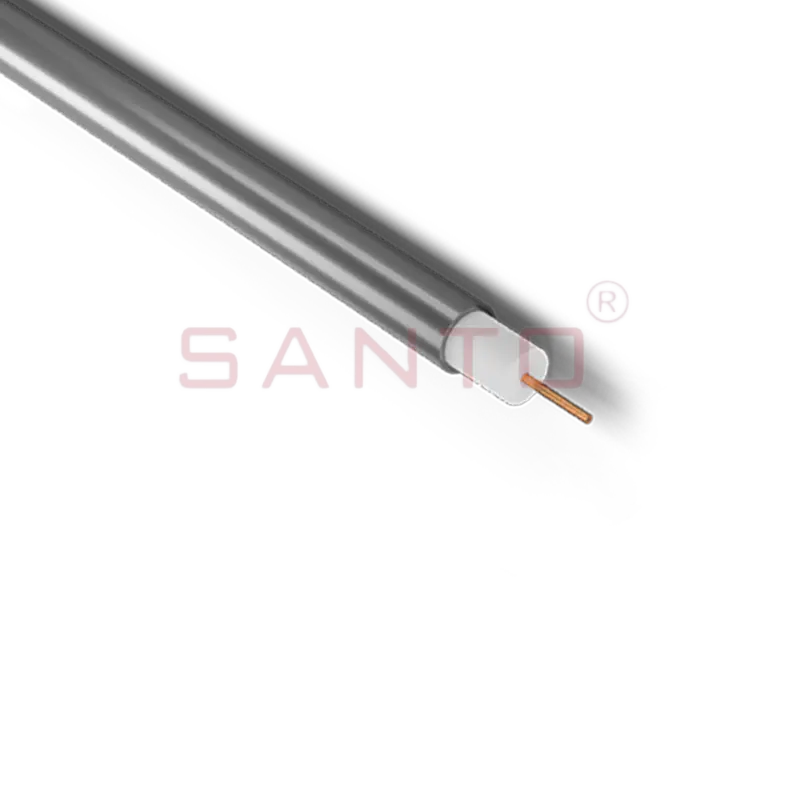 Alloy 825 Sheathed Mineral Insulated Heating CableMineral insulated cable with Alloy 825 sheath for harsh chemical and salt-spray environments, high-temperature heat tracing, and hazardous-area freeze protection.View Product →
Also check compatibility with the thermal insulation system, not just the pipe. Some insulation types and cladding adhesives release corrosive vapours at temperature, and aluminium foil tape applied without a compatible adhesive can lift and leave air gaps that quietly double the local heat loss.
Hazardous Areas, Temperature Class and Control Hardware
In a classified area, the cable and every single accessory must carry the right certification, and the system must be designed so the hottest achievable surface stays below the temperature class limit even under fault conditions.
That has two consequences. First, the bill of materials grows: power junction boxes, tee and tail boxes, thermostats and sensors must all be rated for the zone, not just the cable. Second, the design method changes. A self-regulating circuit that is "inherently" safe by behaviour is not automatically a stabilised design; where the classification demands it, the circuit needs limiting control — a thermostat with a set point below the class limit, or a limiter that cuts power on over-temperature — plus documentation showing the arithmetic.
Control selection deserves more attention than it usually gets. Pipe-wall sensing beats ambient sensing on process lines, a pipeline induction thermostat rated for the classified area removes the need to break the pipe wall for a probe, and an alarm contact wired back to the DCS turns a silent failure into a work order. Add residual current protection at 30 mA for personnel safety and confirm earth loop impedance on long circuits before commissioning, because a cable that trips its breaker on a wet morning is usually an insulation or earthing problem, not a heating problem.
For lines running through a zone boundary where a probe cannot be inserted, a pipeline induction thermostat for hazardous areas senses pipe temperature through the wall and keeps the control loop inside the certified envelope.
High-Temperature and Long-Distance Duties
Once the maintain temperature climbs above roughly 150 °C, or a single circuit has to cover several hundred metres, self-regulating tape stops being the economic or technical answer.
High-temperature constant wattage cable, including carbon-fibre resistive types, keeps a stable output at temperatures where PTC materials have lost most of their wattage, and series construction avoids the voltage-drop penalty that limits long parallel circuits. The engineering price is that the cable must be cut and terminated to a calculated resistance, and every circuit needs a limiter. Where the total heat load is large and the run is measured in kilometres, skin effect tracing is generally the only practical option; it concentrates current in the pipe wall itself and is designed as a system rather than a cable.
 AFF-CT High-Temperature Carbon Fiber Constant Power Heating CableCarbon-fiber constant-power cable for high-temperature process maintenance, with fluoropolymer jacket, hazardous-area approvals, and 110/230/480 Vac options.View Product →
Designers should also sanity-check the power supply at this level. Long, high-wattage circuits pull significant current, and the upstream transformer, cable sizing and switchgear rating often become the constraint rather than the heating cable itself.
What to Put in the Datasheet and Inquiry
A complete line data sheet shortens quotation time and removes most of the assumptions a supplier would otherwise have to make. Include the following for each traced line:
- Line number, pipe size, material and length, including valves, flanges, filters and instrument connections.
- Product name, maintain temperature, allowable maximum temperature and the minimum ambient used for design.
- Insulation type, thickness, cladding and indoor or outdoor exposure, plus wind and wash-down conditions.
- Area classification, temperature class and gas group for cable, junction boxes and controls.
- Supply voltage, phases, frequency, available breaker capacity and the control and alarm philosophy.
- Required documentation: heat loss calculations, certification, installation drawings, test records and spare parts.
If the maintain temperature, the margin and the classification are fixed, the accessory list can be priced with confidence rather than revised later — which is where most of the cost overrun on traced pipelines actually comes from.
Common Procurement Mistakes
Most under-performing traced lines were specified incorrectly long before anyone installed them. These mistakes repeat across projects:
- Buying on wattage alone. Two cables rated at 30 W/m can behave completely differently at the maintain temperature; compare output at the operating point, not the catalogue headline.
- Ignoring cold-start current. Self-regulating cable can draw several times its steady-state current at switch-on, which affects breaker sizing and panel layout.
- Treating accessories as an afterthought. Junction boxes, brackets, tapes and clamps are often 20–30 % of the material value and the first thing cut from a budget, then re-ordered after the cable is already on site.
- Forgetting spare cable and service loops. Order a spare coil plus allowances for terminations and future repairs; matching a batch later is rarely possible.
- No commissioning records. Insulation resistance and circuit continuity readings taken at handover are the reference that makes future fault-finding a two-hour task instead of a two-day one.
FAQ
Can one cable family cover an entire chemical plant?
No, and forcing it usually costs money. Most sites end up with self-regulating cable on utility and process lines up to about 110 °C, constant wattage on high-temperature duties, and mineral insulated or skin effect systems on the hottest or longest runs.
Does self-regulating cable still need a thermostat?
It needs one for control, not for protection. Self-regulating cable will not overheat itself, but without a thermostat and sensor it will run whenever power is on, which wastes energy and makes the maintain temperature unpredictable.
How much cable tolerance should I plan for?
Allow for the straight run plus roughly 1.5–2 m per valve or flange, terminations at both ends, and a service loop at each junction box. Ten percent spare on the total is a reasonable rule on a new installation.
Why do traced lines underperform after handover?
Usually installation, not selection: air gaps between the cable and the pipe, compressed or missing insulation, cladding damaged during scaffolding, or an incorrectly set thermostat. The heating cable itself is rarely the root cause.
Getting the duty, the chemistry, the classification and the circuit length right takes an afternoon of engineering. Correcting them after commissioning takes a shutdown. If you already have line data, send the pipe list to our engineers and we will check the calculated heat loss, cable family and accessory set against your site conditions before the bill of materials is frozen.